Natural Elements in Interior Design: Bringing the Outdoors In
As modern life becomes increasingly digital, more homeowners are looking for ways to reconnect with nature—starting with their own interiors. Natural elements in interior design help create a warm, calming atmosphere while promoting wellness and sustainability. Whether through wood, stone, water features, or living plants, these design choices add authenticity and harmony to any living space.
1. The Power of Wood
Wood is one of the most versatile and timeless natural materials. It brings warmth, texture, and a sense of grounding to any room. Whether used in flooring, furniture, ceiling beams, or accent walls, wood adds organic character. Popular choices include oak, walnut, teak, and reclaimed wood for a rustic look.
Tip: Use light-colored woods for Scandinavian vibes, or go dark and rich for a more luxurious, modern effect.
2. Stone Surfaces and Textures
Stone adds elegance and durability to interiors. From marble countertops to slate flooring or stacked stone feature walls, it brings the strength and coolness of nature inside. Textured stone backsplashes or bathroom walls add tactile depth that stands out in minimalist spaces.
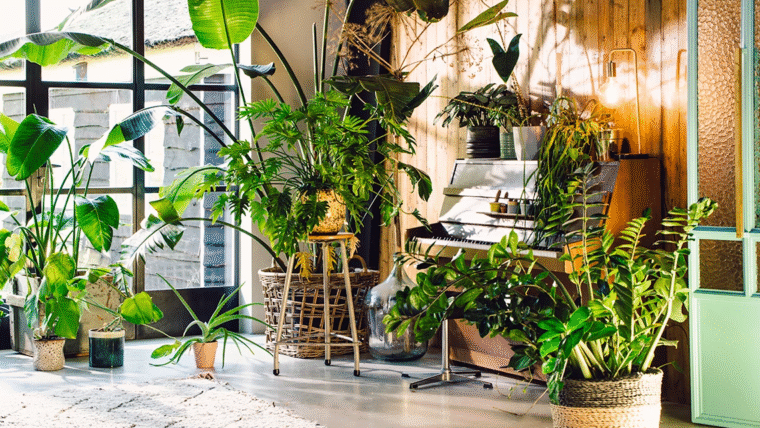
3. Incorporating Living Plants
One of the easiest ways to embrace nature indoors is with living greenery. Not only do plants purify air and add vibrancy, but they also act as natural decor.
- Best plants for living rooms: Monstera, Fiddle Leaf Fig, Rubber Plant
- Low-maintenance choices: Snake Plant, Pothos, ZZ Plant
Hanging plants, indoor herb gardens, and terrariums are also great for small spaces.
4. Water Features for Calmness
Water has a soothing effect. Adding a small indoor fountain or tabletop water feature can introduce tranquility and white noise that enhances relaxation. In larger spaces, indoor ponds or aquariums can be true centerpieces.
5. Natural Fabrics and Textiles
Bring the softness of nature into your interior with organic cotton, linen, wool, jute, or hemp. These fabrics not only feel luxurious but also promote breathability and environmental consciousness. Use them in curtains, rugs, upholstery, and cushions to balance harder materials like wood and stone.
6. Earthy Color Palettes
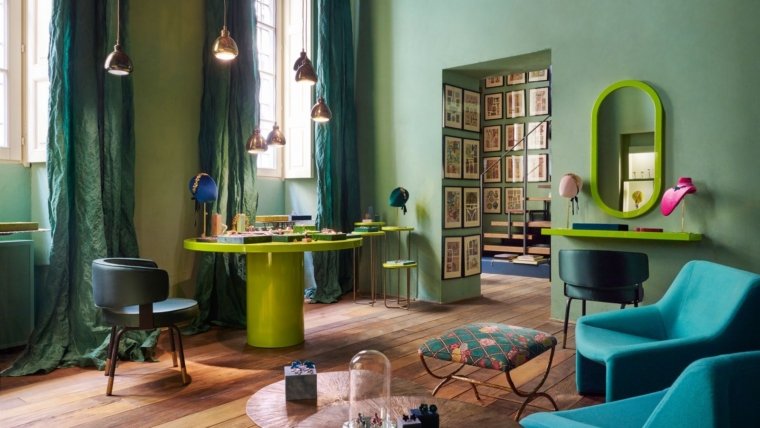
Think beyond materials—color plays a huge role in evoking nature. By incorporating earthy tones into your interior design, you can create a calming atmosphere that mimics the natural world. Earth tones like olive green, terracotta, sand beige, and sky blue help bring the outdoors inside, creating a space that feels grounded and peaceful.
Start with a neutral base of soft beige or sand to create a warm, welcoming foundation. These colors pair effortlessly with deeper shades of green, such as olive or moss, which evoke a sense of tranquility and vitality, reminiscent of lush forests. Terracotta and ochre can add a touch of warmth and rustic charm, reminding you of the earth’s rich textures. Sky blue, a color often associated with open skies and vast oceans, can promote calmness and serenity, perfect for spaces where relaxation is key.
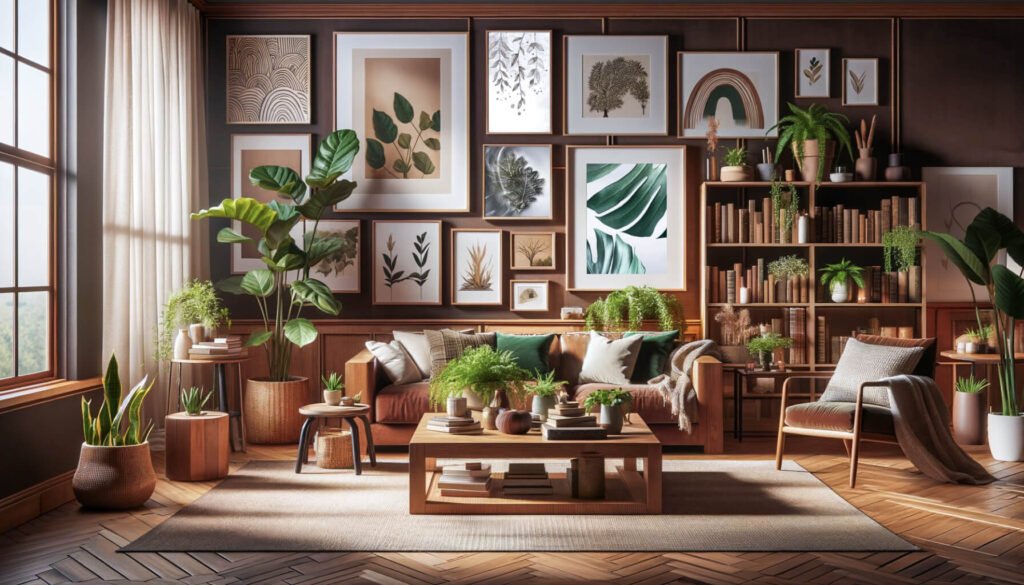
To achieve a cohesive look, pair these colors with natural materials like wood, stone, and woven textures. Wooden furniture and decor pieces in natural oak or walnut tones can complement earthy walls, while stone accents, such as marble or slate, enhance the organic feel. Woven rattan or wicker furniture brings texture and depth to your design, adding layers of visual interest without overwhelming the space.
For added contrast and balance, introduce soft whites or off-whites as accents, which can lighten the palette and prevent the room from feeling too heavy. The key is to find a balance between the colors to create a harmonious and inviting space that reflects nature’s beauty.
Conclusion
Using natural elements in interior design allows you to create a serene and organic environment that reflects balance, sustainability, and style. Whether you go all-out with wood and stone or simply add a few plants and textiles, your space will instantly feel more grounded and alive.