How to Choose the Perfect Indoor Plants for Your Interior Design
Bringing nature indoors is one of the most effective ways to add warmth, texture, and vitality to your living space. Perfect indoor plants for interior design not only purify the air but also elevate your home by adding layers of color and life. However, choosing the right plants that complement your home’s aesthetic and fit your lifestyle is key to maintaining a timeless, balanced space. In this guide, we’ll help you choose the perfect indoor plants based on light, space, and design preferences.
1. Understand Your Lighting Conditions
Lighting is the most important factor when selecting perfect indoor plants for interior design. Some plants thrive in bright, indirect sunlight, while others prefer low-light environments. Knowing the lighting conditions in your space will help you make the best choice.
-
Bright Light: Consider plants like Fiddle Leaf Fig, Bird of Paradise, or Rubber Plant.
-
Moderate Light: Go for Peace Lily, Pothos, or Dracaena.
-
Low Light: Choose Snake Plant, ZZ Plant, or Cast Iron Plant.
Make sure to observe your space during the day to see where the light hits and for how long. This will guide you in selecting plants that will thrive in your environment.
2. Match Plant Style with Your Interior Design
When choosing the perfect indoor plants for interior design, your plant style should match the overall vibe of your space. Here are some ideas for different interior design styles:
-
Modern Minimalist: Use plants with clean lines like Sansevieria or Monstera.
-
Bohemian/Boho: Embrace a lush look with trailing plants like Ivy or Philodendron.
-
Scandinavian: Stick to soft greens in simple ceramic pots—think Rubber Plant or Chinese Money Plant.
-
Rustic: Combine greenery with natural wooden planters or baskets.
This ensures that your plants don’t just add greenery but also seamlessly blend with the design of your room.
3. Consider Plant Size and Placement
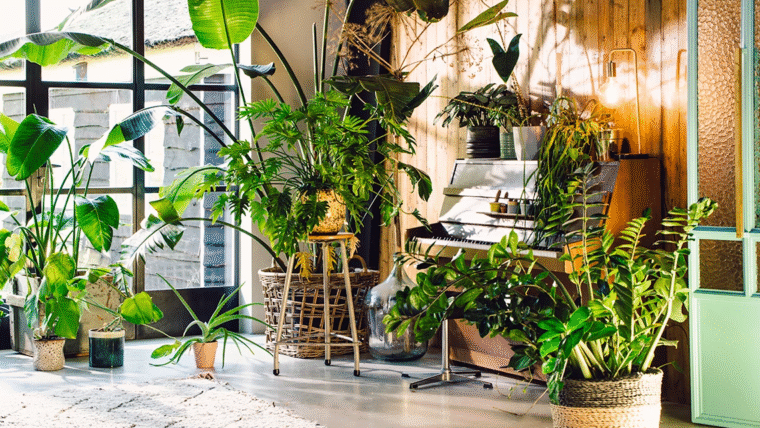
Another key consideration when selecting the perfect indoor plants for interior design is the size and placement of the plant. Larger plants can make a bold statement, while smaller ones work well in more subtle roles.
-
A tall plant like a Kentia Palm can act as a statement piece in an empty corner, while smaller succulents or herbs are perfect for shelves or kitchen counters.
-
Use plant stands or hanging planters to create vertical depth and keep floor space open.
Group plants of varying sizes together for visual interest, and think about how they can define different areas within the room.
4. Think About Maintenance
If you’re new to indoor plants or have a busy lifestyle, opt for low-maintenance varieties when choosing the perfect indoor plants for interior design. Some plants are easier to care for than others, making them ideal for beginners or those with limited time.
-
Low-Maintenance Plants: Snake Plant, ZZ Plant, Pothos, Aloe Vera.
These plants require minimal watering and can survive in less-than-ideal conditions, making them a great option for anyone looking to enjoy the beauty of indoor plants without the hassle.
5. Use Plants as Design Anchors
Plants can be more than just decoration. When you choose the perfect indoor plants for interior design, use them as functional design anchors that frame furniture and define spaces.
-
Place a large fern near your reading nook for a cozy vibe.
-
Add a small succulent to your office desk for a productivity boost.
-
Use cascading plants to soften shelves or bookcases.
Strategically placing plants in your space not only enhances the aesthetic but also brings balance and flow to the room.
6. Consider Air Quality and Health Benefits
Indoor plants can improve the air quality in your home by filtering out toxins and releasing oxygen. Plants like the Peace Lily, Spider Plant, and Aloe Vera are especially effective at purifying the air. When you choose the perfect indoor plants for interior design, consider their health benefits as well as their aesthetic appeal.
Conclusion
Choosing the right perfect indoor plants for interior design is more than just about decoration—it’s about creating an environment that reflects your personality, enhances the aesthetics of your space, and supports your well-being. By considering lighting, design, size, and maintenance needs, you can bring life into your space without compromising on style.
Whether you’re filling empty corners, adding greenery to shelves, or incorporating plants into your minimalist decor, the right indoor plants can transform any room into a vibrant, refreshing space.